Psychology is a popular A-level subject at Thornhill College and an increasing number of our A-level pupils are continuing to study Psychology-related courses at University.
WHAT IS PSYCHOLOGY?
Psychology is the scientific study of how people behave and how their minds work. It is concerned with understanding the experience and behaviour of humans.
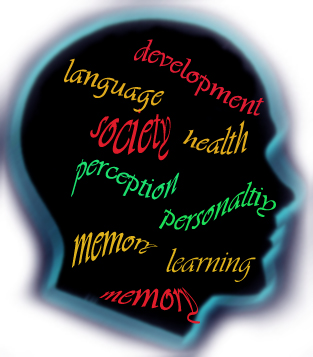 The word "psychology" is of Greek origin : "psyche" can be translated as "mind" or "soul" and "logos" indicates the study of teaching style. Psychology therefore means the "study of the mind". At the end of the 19th century, the German Psychologist Wilhelm Wundt opened the first psychology laboratory in Leipzig; the beginning of psychology as a scientific discipline in its own right. Prior to this, psychology had generally been regarded as a branch of philosophy and, as such dates back to the time of Aristotle and Plato.
In the last 100 years, psychology has shifted from being a study of the mind to the scientific study of human and non-human animal behaviour. Psychologists study the reasons why people or members of other species behave as they do.
A-level Psychology
A-level Psychology is an excellent introduction to the study of human behaviour and can lead to a range of interesting careers and courses of further study.
Entry Requirements
Those who have indicated Psychology as a preference will have priority provided they have a good GCSE profile with at least a Grade B in English and Grade BB in Double-Award Science.
Individual cases will be considered on their merits.
At Thornhill College, pupils study the AS and A-level Psychology syllabus of the Assessment and Qualifications Alliance (AQA) examining body.
Psychology is a linear course. A-Level students will be examined at the end of their two year course. However, students will also have the opportunity to sit an AS Psychology examination at the end of Year 13.
Aims of the Course
The aims of the AS and A-level courses are:
- an introduction to selected aspects of psychological theory and research,
- opportunities to develop critical skills of analysis, interpretation and evaluation,
- opportunities to explore how psychology has contributed to an understanding of individual, social and cultural life,
- an awareness of the ethical responsibilities of psychological researchers,
- an opportunity to develop skills appropriate to the implementation of psychological research.
Psychology can be combined with a number of different subjects. In particular, Biology, English, Mathematics (Statistics), Health & Social Care.
What Makes a Successful Psychology Student?
 An interest in people
A curiosity about what makes yourself and other people 'tick'. Look out for newspaper articles that may be relevant - eg the difference in exam achievements for boys and girls, bullying, the effect of mass media on society, eating disorders...etc (the list is virtually endless).
A willingness to participate
Get the most out of tour course by offering your ideas and opinions and contributing to discussions. Also, listen to others and be genuinely receptive to their opinions. Even teachers change their minds in response to new evidence and experiences.
An ability to write effectively
Psychology involves writing essays and producing written accounts of practical work. The ability to write coherently and accurately is vital for success on the course.
Effort and initiative
Psychology is a fairly demanding A-level; it is by no means an 'easy option' as some may think. Success depends on sustained hard work. Take an active role in your own learning. Don't simply file your notes away when you have completed a topic; read over the main points and make a revision summary.
Careers
Psychology is relevant to various careers. In particular:
- Teaching
- Educational Psychology
- Clinical Psychology
- Counselling
- Occupational Psychology
- Health Psychology
- Forensic Psychology
- Environmental Psychology
- Human Resource Management
- Sports Psychology
- Art/ Music Therapy
- Psychiatric Nursing
- Hypnotherapy
- Social Work
- Ergonomist
- Speech Therapist
- Advertising